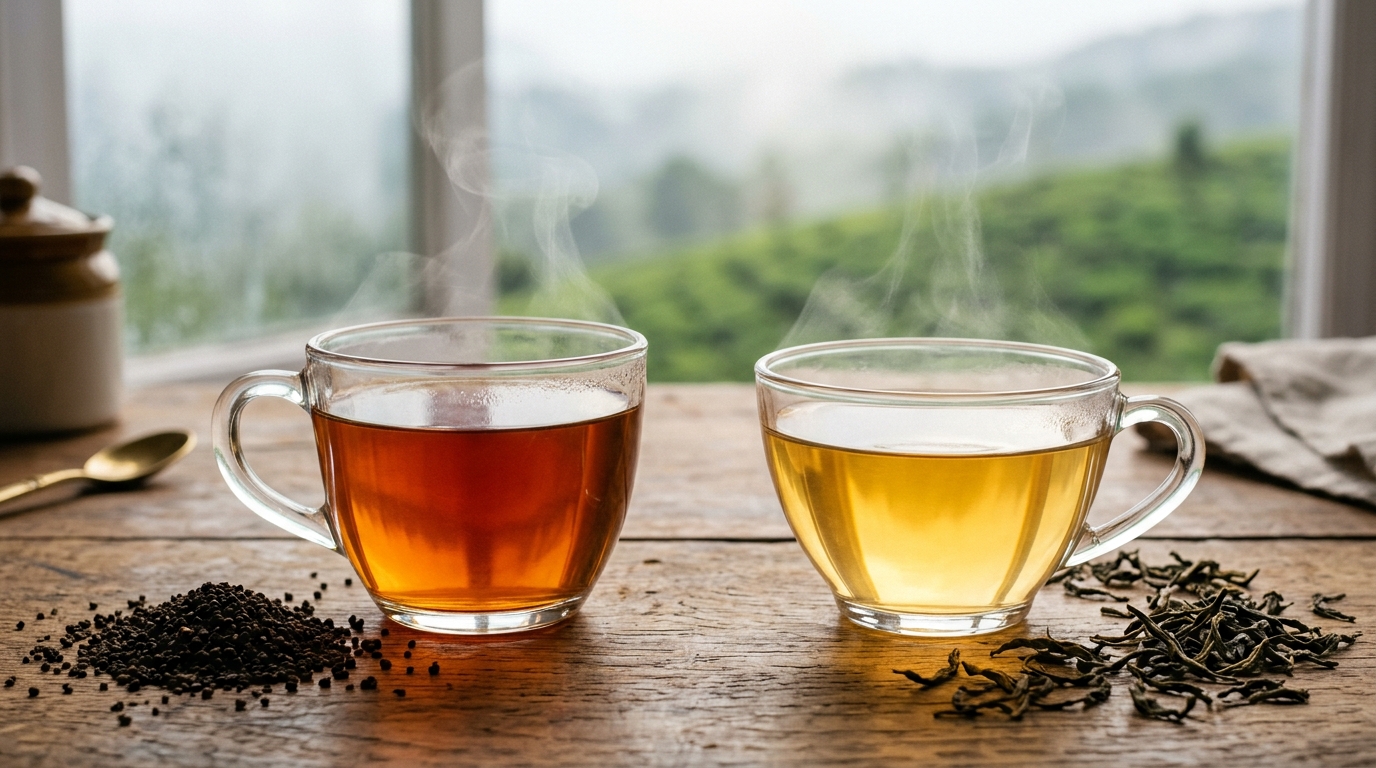
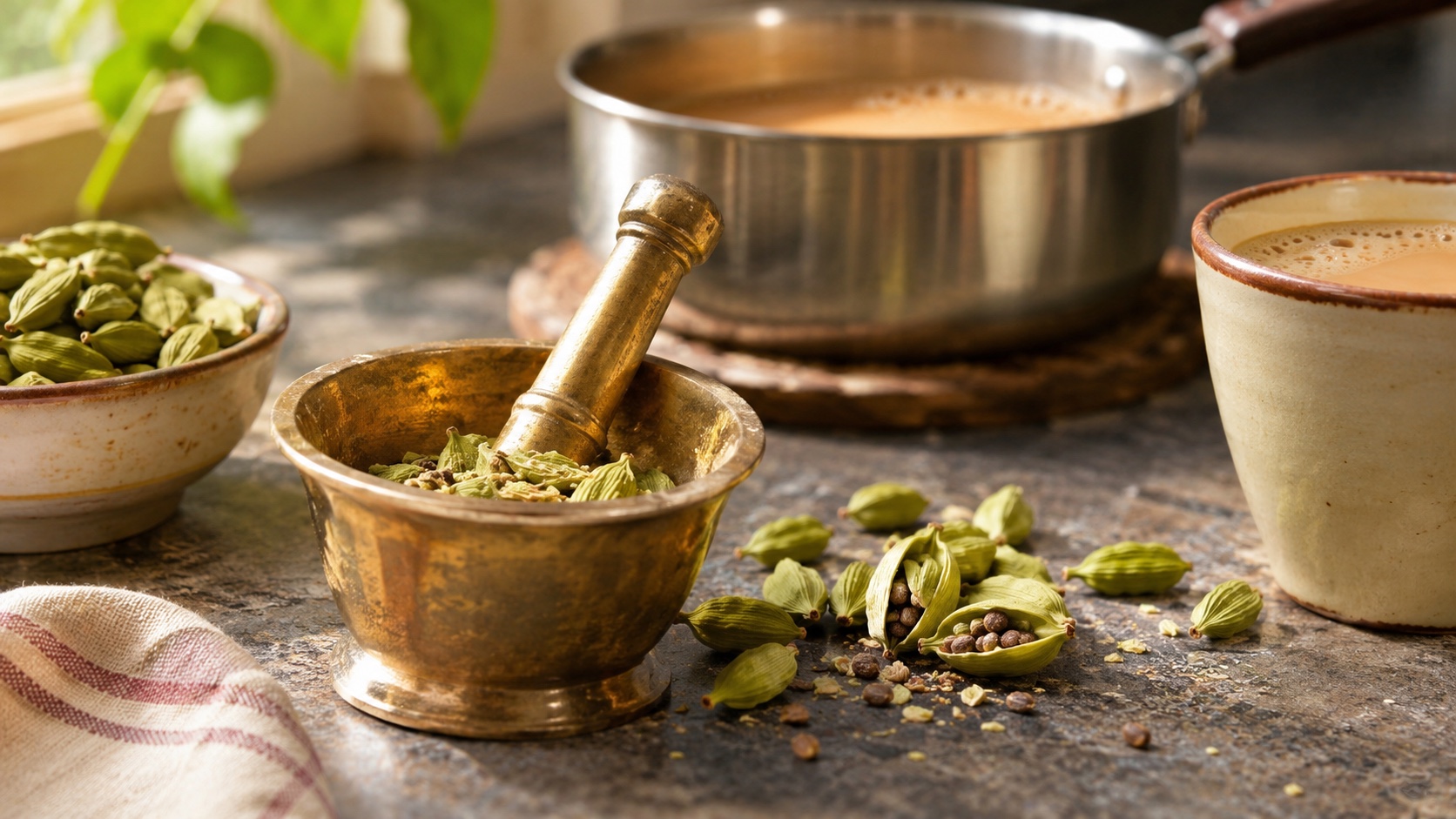
There's a particular aroma that fills an Indian kitchen when freshly crushed elaichi meets a saucepan of simmering chai. It's sweet, fragrant and instantly recognisable.
For many people, that familiar cardamom flavour is what makes an ordinary cup of tea feel a little more special.
Some prefer their chai with just a hint of elaichi, while others enjoy a stronger fragrance that fills the room before the tea is even poured.
But making good cardamom tea isn't simply about adding a few pods to boiling water. The type of cardamom, the tea you use, and the way you brew them all influence the finished cup.
And if you're buying cardamom-flavoured tea online, you'll find everything from loose chai patti and tea bags to instant premixes. They aren't all the same.
So, what exactly is cardamom flavoured tea, how does it taste, and what's the best way to prepare it?
This guide covers everything you need to know about elaichi chai, including its ingredients, preparation, potential health benefits and how to choose a tea that suits your taste.
What Is Cardamom Flavoured Tea?
Cardamom flavoured tea is tea prepared with cardamom, a fragrant spice known as elaichi in Hindi.
In India, it commonly refers to black tea brewed with green cardamom, water and milk. Sugar may also be added according to personal preference.
The cardamom gives the tea its characteristic aroma, while the tea leaves provide the familiar flavour and strength of chai.
You can prepare it using freshly crushed cardamom pods or purchase tea that has already been blended or flavoured with cardamom.
Both approaches can make an enjoyable cup, although the result depends on the ingredients and brewing method.
What Is Elaichi Chai?
Elaichi chai is the familiar Indian name for cardamom-flavoured tea.
Elaichi means cardamom, and chai means tea.
In most Indian households, elaichi chai is prepared using black tea, green cardamom, milk and water.
It's commonly enjoyed as morning tea, during an afternoon break or when serving chai to family and guests.
The preparation varies from household to household. Some people crush the cardamom pods before adding them to boiling water. Others prefer a ready-flavoured tea blend because it saves the extra preparation.
Neither approach is necessarily better. What matters is the flavour you enjoy.
Is Cardamom Tea the Same as Masala Chai?
Not exactly.
Cardamom is one of the spices commonly used in masala chai, but the two preparations aren't identical.
Elaichi chai typically highlights the aroma and flavour of cardamom.
Masala chai usually combines several spices, which may include ginger, cardamom, cinnamon, cloves and black pepper.
If you enjoy a fragrant cup with one clearly noticeable spice, elaichi chai may suit you. If you prefer a more layered combination of spices, masala chai is worth trying.
What Does Cardamom Flavoured Tea Taste Like?
Cardamom has a distinctive flavour that's difficult to confuse with other common chai spices.
Green cardamom is aromatic, slightly sweet-smelling and gently spicy. Depending on how it's used, you may also notice floral or faint citrus-like notes.
Unlike ginger, which brings a sharp and warming character, cardamom contributes more fragrance than heat. This is why a small amount can make a noticeable difference to a cup of tea.
When combined with milk chai, cardamom's aroma blends with the richness of milk and the flavour of black tea. The result can be smooth, fragrant and satisfying without requiring a complicated spice mixture.
How Does Cardamom Taste with Assam Black Tea?
Assam black tea is well suited to many Indian milk-chai preparations because of its bold, full-bodied character.
When paired with cardamom, the tea provides a noticeable base while the spice adds fragrance. The combination works particularly well when the flavours are balanced:
- Too much cardamom can dominate the cup, making the tea flavour difficult to notice.
- Too little tea, especially when using a large proportion of milk, can leave the drink tasting weak.
A good elaichi chai should allow you to appreciate both the tea and the cardamom. If you're curious about the characteristics of the tea itself, our guide to what makes Assam tea special explains its origin, flavour and brewing qualities.
Does Cardamom Make Tea Sweeter?
Cardamom can make tea smell sweeter because of its naturally fragrant compounds, but it doesn't add sugar to the drink.
The sweetness you taste still depends on the ingredients and whether you add sugar or another sweetener.
If you're trying to reduce added sugar in your chai, you may enjoy the fragrance that cardamom contributes. However, it shouldn't be considered a direct substitute for sweetness. The best approach is to adjust both the cardamom and sugar gradually until the cup suits your taste.
Which Cardamom Is Best for Tea?
If you've ever bought cardamom from a grocery shop, you may have noticed two common varieties: green cardamom and black cardamom.
Although they share a name, their flavour profiles are quite different. For traditional Indian elaichi chai, green cardamom is generally the preferred choice.
Green Cardamom vs Black Cardamom
| Feature | Green Cardamom | Black Cardamom |
|---|---|---|
| Common Hindi name | Chhoti elaichi | Badi elaichi |
| Aroma | Sweet, floral and fragrant | Smoky, earthy and strong |
| Flavour | Aromatic with gentle spice | Stronger, with a smoky character |
| Common uses | Chai, sweets, desserts and spice blends | Savoury dishes and spice blends |
| Suitability for everyday elaichi chai | Commonly preferred | Less commonly used |
Green cardamom complements the flavour of milk chai without introducing the smoky character associated with black cardamom. Black cardamom has its place in Indian cooking, but it generally produces a different flavour from the familiar elaichi chai most people expect.
Should You Use Whole Cardamom Pods or Powder?
Both can be used.
Whole green cardamom pods are convenient to store and can be lightly crushed just before brewing. Crushing the pod exposes the seeds, helping release their fragrance into the water.
Ground cardamom powder is easier to measure and add, particularly when preparing several cups. However, ground spices can gradually lose their aroma during storage.
If you're using cardamom powder, begin with a small pinch. Its flavour can become overpowering if too much is added.
You can also use a tea blend that already contains cardamom flavour. That may be more convenient when preparing chai on a busy morning.
How to Make Elaichi Chai at Home
You don't need expensive equipment or a complicated recipe to prepare a good cup of cardamom tea. A saucepan, a strainer and a few ingredients are enough.
The following recipe is a practical starting point for traditional Indian milk chai.
☕ Ingredients for One Cup of Elaichi Chai
| Ingredient | Quantity |
|---|---|
| Assam CTC black tea | 1 teaspoon |
| Green cardamom | 1–2 pods |
| Water | ½ cup |
| Milk | ½ cup |
| Sugar | Optional, to taste |
*The quantities are approximate. If you're making elaichi chai for the first time, start with one cardamom pod. You can always add more next time if you prefer a stronger aroma.
Step-by-Step Elaichi Chai Recipe
Step 1: Lightly crush the cardamom
Place one or two green cardamom pods on a clean surface. Press them gently using a mortar and pestle or the back of a spoon. The aim is to split the pods and expose the seeds rather than grind everything into a fine powder.
Step 2: Heat the water
Pour half a cup of water into a small saucepan and bring it to a boil.
Step 3: Add the crushed cardamom
Add the cardamom to the hot water. Let it simmer for approximately 30–60 seconds to begin releasing its aroma. You should notice the fragrance becoming more pronounced.
Step 4: Add the tea
Add approximately one teaspoon of Assam CTC tea. Allow it to brew for about a minute. CTC tea can release colour and flavour relatively quickly, so there's no need to boil it excessively at this stage.
Step 5: Add the milk
Pour in half a cup of milk. Allow the mixture to heat again, then reduce the flame to maintain a gentle simmer.
Step 6: Adjust the strength
Simmer for another two to three minutes, depending on the tea and the strength you prefer. If the flavour becomes too intense, shorten the brewing time when making your next cup.
Step 7: Sweeten and serve
Add sugar if you enjoy sweet chai. Stir, switch off the heat and strain the tea into your cup. Your homemade elaichi chai is ready.
How to Make Stronger Elaichi Chai
If you prefer kadak chai, increase the amount of tea slightly rather than simply boiling it for much longer. Long brewing can increase bitterness and astringency.
You can also adjust the milk-to-water ratio. For example, reducing the proportion of milk may allow the tea flavour to stand out more clearly.
Experiment with small changes rather than adjusting everything at once. That makes it easier to discover what produces your preferred cup.
Can You Make Cardamom Tea Without Milk?
Yes. Cardamom can also be used to flavour black tea prepared without milk.
For a simple version, heat approximately 200 ml of water with one lightly crushed green cardamom pod. Allow the spice to infuse briefly, then add around one teaspoon of black tea. Steep for approximately two to three minutes, adjusting according to the tea's instructions.
Strain and taste. Without milk, the flavour of the tea and the cardamom may be more noticeable. If you find the result too strong, use less tea or shorten the brewing time.
How to Make Elaichi Chai with Ready-Flavoured Tea
If you're using a cardamom-flavoured black tea blend, you may not need to add separate cardamom pods. The product is already intended to provide a cardamom flavour.
Prepare it according to the instructions on the packet. For traditional Indian milk chai, this often means brewing the tea with water and milk, although the exact method depends on the product.
Taste the tea before deciding whether extra cardamom is necessary. A good pre-flavoured blend should be enjoyable without requiring you to add several extra ingredients.
Why Doesn't Homemade Elaichi Chai Taste Right?
Even a simple recipe can go wrong if the ingredients aren't balanced. Here are some common problems and how to correct them:
🔍 Troubleshooting Your Cup
The Cardamom Flavour Is Too Weak: If you're using whole pods without crushing them, the aroma may not develop as noticeably. Try lightly splitting the pods before adding them to hot water. You can also allow the cardamom to infuse briefly before adding the tea leaves. If you're using old ground cardamom, the spice may have lost some of its fragrance.
The Cardamom Is Overpowering: More cardamom doesn't always mean better chai. An excessive amount can dominate the drink and make it difficult to appreciate the tea. Start with one pod per cup and increase gradually if needed.
The Chai Tastes Bitter: Bitterness may result from using too much tea or brewing it for too long. Try reducing the tea quantity slightly or shortening the simmering time. Avoid adding extra sugar solely to cover excessive bitterness. Adjusting the brewing method may produce a better result.
The Chai Tastes Too Milky: If your tea tastes weak after adding milk, the tea base may not be strong enough for your preferred preparation. A suitable Assam CTC tea can help produce a more noticeable tea flavour. You can also experiment with the proportion of water and milk. For more guidance on choosing and brewing CTC tea, read our complete Assam CTC tea guide.
Is Cardamom Tea Good for You? Benefits and Important Considerations
Cardamom has been used in Indian cooking and traditional preparations for generations. Its distinctive aroma makes it a popular ingredient in chai, sweets and savoury dishes.
You may also have seen claims that cardamom tea improves digestion, lowers blood pressure, supports weight loss or helps detoxify the body.
However, it's important to distinguish traditional use from benefits that have been demonstrated through scientific research. An ordinary cup of elaichi chai should not be treated as a medicine or a substitute for medical treatment.
Does Cardamom Contain Beneficial Plant Compounds?
Cardamom naturally contains aromatic compounds responsible for much of its distinctive fragrance. It also contains plant compounds that have attracted scientific interest.
Researchers have investigated cardamom for potential effects on inflammation and certain metabolic health markers. However, the results of these studies need to be interpreted carefully.
Many clinical trials have used measured amounts of cardamom powder or supplements over extended periods. That is different from adding one or two cardamom pods to a cup of tea. Therefore, we cannot assume that ordinary cardamom chai produces the same effects observed in those studies.
Can Cardamom Tea Help with Digestion?
Cardamom has a long history of traditional use in food and preparations associated with digestion. Many people enjoy its aroma after meals.
However, there is not enough reliable clinical evidence to claim that a normal cup of cardamom tea treats indigestion, acidity, bloating or other digestive conditions. If you enjoy elaichi chai after eating, that's a matter of preference. Persistent digestive symptoms should be assessed appropriately rather than treated with tea alone.
Does Cardamom Tea Contain Antioxidants?
Cardamom contains naturally occurring plant compounds with antioxidant activity. Black tea also contains polyphenols, including compounds that develop during the oxidation of tea leaves.
These substances are studied for their biological properties. However, laboratory antioxidant activity doesn't automatically establish that drinking a particular tea will prevent disease. The available evidence does not justify presenting elaichi chai as a cure or guaranteed way to improve health.
Does Elaichi Chai Contain Caffeine?
Yes, when it's prepared using regular black tea. The caffeine comes from the tea leaves, not the cardamom.
The amount in a cup depends on the tea used, quantity, brewing time and serving size. A stronger-tasting cup doesn't necessarily have a proportionally higher caffeine content.
If you're sensitive to caffeine, consider drinking smaller servings or avoiding caffeinated chai close to bedtime. A preparation made only from cardamom and hot water would not contain caffeine from tea leaves, but it would be a cardamom infusion rather than traditional black-tea elaichi chai.
Does Adding Milk or Sugar Affect the Drink?
Milk contributes nutrients and calories, while added sugar increases the sugar content of the finished beverage.
If you drink several cups of sweet chai daily, it's useful to consider how much sugar you're adding overall. You can gradually reduce the amount if that suits your preferences.
There's no need to make health claims about cardamom to appreciate it. For most tea lovers, its main attraction is the flavour and fragrance it brings to an everyday cup.
Cardamom Tea Powder, Tea Bags or Premix: Which Is Better?
When shopping online, you'll come across different types of cardamom-flavoured tea. They may all promise the familiar taste of elaichi, but they can contain different ingredients and require different preparation methods.
Understanding these differences can help you choose a product that suits your routine.
Different Types of Cardamom Tea
| Tea Format | What It Typically Contains | Best Suited For |
|---|---|---|
| Loose cardamom-flavoured tea | Loose black tea blended or flavoured with cardamom | Traditional Indian milk chai |
| Cardamom tea bags | Tea with cardamom or cardamom flavouring in tea bags | Convenient brewing |
| Cardamom tea premix | A prepared mixture that may include tea, sugar, milk solids and flavouring | Quick preparation |
| Plain tea with fresh cardamom | Black tea prepared with crushed cardamom pods | People who want to control the ingredients |
| Instant cardamom tea | A soluble preparation designed for quick mixing | Office or travel convenience |
The exact ingredients vary by product. Always read the label rather than assuming products with similar names contain the same things.
Is Cardamom Tea Powder the Same as Instant Premix?
Not necessarily.
Some products described as cardamom tea powder contain granular black tea blended with cardamom. These products still need to be brewed and strained.
An instant premix, on the other hand, may be designed to dissolve in hot water. It may also contain sugar, milk solids and other ingredients. The easiest way to distinguish them is to check the ingredient list and preparation instructions.
Which Option Is Better for Indian Milk Chai?
If you enjoy preparing chai in a saucepan, loose black tea or a suitable cardamom-flavoured CTC blend may be more convenient for achieving your preferred strength. You can control the amount of milk, water and sugar.
Tea bags can be useful when you want a quicker preparation without loose tea leaves. Premixes may suit people who need convenience at work or while travelling. However, some premixes already contain sugar or milk solids, which gives you less control over the final drink. The best option depends on how you usually prepare tea.
Find Your Everyday Elaichi Chai
Enjoy the familiar fragrance of cardamom with the bold character of Assam tea. Explore Saapati's Elaichi Chai, sourced from Doomdooma, Assam, for a flavourful addition to your everyday tea routine.
How to Choose Good Cardamom Flavoured Tea Online
If you're buying cardamom tea for the first time, the number of choices can be confusing. Some products emphasise strong tea flavour, while others focus on cardamom fragrance or quick preparation.
Instead of choosing solely by price or attractive packaging, consider the following details:
1. Check the Tea Base
For traditional Indian milk chai, black tea is a common choice. Assam CTC tea is particularly popular because its robust flavour works well with milk. If you prefer a lighter cup without milk, another tea style may appeal to you. Check whether the product contains black tea, green tea or a different type of infusion. This will help you understand what to expect.
2. Look at How the Cardamom Flavour Is Added
Different products may contain whole cardamom, ground cardamom, extracts or permitted flavourings. These ingredients can produce different results. A product containing actual cardamom isn't automatically superior in every respect, and the form of the ingredient doesn't tell you everything about the finished flavour. Read the ingredients to understand what you're purchasing. If you specifically want a blend containing cardamom rather than only added flavouring, look for that information on the label.
3. Check for Added Sugar and Milk Solids
This is particularly important when purchasing instant tea premixes. A loose tea blend may allow you to add milk and sugar separately. A premix may already contain them. Check the ingredients and nutrition information where provided. This helps you choose a product that fits your preparation habits and dietary preferences.
4. Compare Prices Fairly
A larger packet isn't necessarily better value unless you consider how much tea it contains. Compare similar products by their price per 100 grams. For example:
| Pack | Quantity | Example Price | Price per 100g |
|---|---|---|---|
| Tea A | 100g | ₹120 | ₹120 |
| Tea B | 250g | ₹225 | ₹90 |
Tea B costs less per 100g, but price isn't the only factor. Consider the ingredients, quality, freshness and whether you enjoy the tea.
5. Choose a Suitable Pack Size
If you're trying a new cardamom tea, a smaller packet is usually a sensible starting point. You can prepare a few cups and decide whether the strength and fragrance suit you. Once you've found a tea you enjoy, larger packs may offer better value. However, buying more than you can use while the tea is fresh may not be worthwhile.
6. Read the Product Label
Check the ingredients, net quantity, relevant date markings, storage instructions and FSSAI information. The ingredient list is especially important when buying flavoured products. If you're comparing loose tea and instant premix, the label can reveal differences that aren't immediately obvious from the front of the packet.
7. Look Beyond Star Ratings
Customer reviews can be helpful, particularly when people describe the actual drinking experience. Look for comments about the strength of the cardamom aroma, balance between tea and spice, suitability for milk chai, and freshness or packaging. Remember that personal preferences vary. Someone who enjoys very strong cardamom flavour may rate a delicate blend differently from someone who prefers only a hint of elaichi.
8. Store Your Tea Properly
Once opened, keep loose tea in a clean, airtight container. Store it away from moisture, direct sunlight, heat and strong odours. Avoid leaving an open packet near the stove, where steam and cooking smells can affect its quality. If you're using ground cardamom separately, keep that sealed as well. Proper storage helps preserve the tea's aroma and flavour.
Elaichi Chai vs Adrak Chai vs Masala Chai: What's the Difference?
Indian chai comes in many flavours, and each offers a different experience. If you're unsure whether cardamom tea is right for you, comparing it with other familiar varieties can help:
| Tea Variety | Main Flavour | What Makes It Different |
|---|---|---|
| Elaichi Chai | Sweet-spicy, floral and aromatic | Highlights the distinctive fragrance of cardamom |
| Adrak Chai | Sharp and warming | Ginger provides a more pronounced, spicy character |
| Masala Chai | Rich, layered and spicy | Combines several spices for a more complex flavour |
| Plain Assam Tea | Bold, brisk and malty | Allows the tea's natural character to stand out |
If you enjoy a fragrant cup without too many competing spices, elaichi chai may suit you. If you prefer the sharper flavour of ginger, adrak chai is worth considering. For a more layered combination of spices, masala chai may be your preferred option. And if you enjoy experimenting with milk, sugar and spices yourself, plain Assam tea gives you that flexibility.
There isn't one flavour that's better for everyone. The choice depends on what you enjoy drinking.
Frequently Asked Questions About Cardamom Tea
The Takeaway: Is Cardamom Flavoured Tea Worth Trying?
If you enjoy fragrant Indian chai, cardamom-flavoured tea is certainly worth exploring. Its distinctive aroma makes it different from plain black tea without requiring a complicated mixture of spices.
You can prepare elaichi chai at home using freshly crushed green cardamom pods or choose a ready-flavoured tea blend for convenience. For traditional milk chai, a robust Assam black tea can provide a satisfying base that complements cardamom's fragrance.
The key is balance. Too much cardamom can overpower the tea, while excessive brewing can introduce bitterness. A good cup should allow you to enjoy both the tea and the spice.
When buying cardamom tea online, look beyond attractive packaging. Check the tea type, ingredients, preparation instructions and freshness. And while cardamom has attracted scientific interest, there's no need to rely on exaggerated health claims to appreciate it.
Sometimes, the reason to enjoy a particular tea is simply that you love the way it tastes and smells.
Enjoy the Familiar Aroma of Elaichi Chai
Love the fragrance of cardamom in your everyday cup? Explore Saapati's Elaichi Chai, bringing together the character of Assam tea sourced from Doomdooma, Upper Assam, with the familiar flavour of elaichi. Whether it's your morning chai or a relaxing evening cup, discover a flavour that suits your daily routine.